
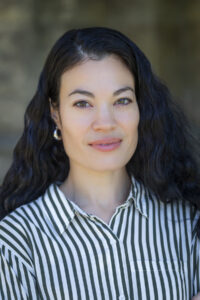
 Pacific School of Religion is pleased to announce that Dr. Lisa Asedillo will be on a semester-long sabbatical during the coming Spring 2026 term. According to the PSR Faculty Manual, “Sabbaticals are granted for research projects that have clearly specified and realistic publication goals.” Dr. Asedillo’s sabbatical follows the required period of service to the school and was approved after a successful review process involving faculty, administration, and the Board of Trustees.
During her sabbatical, Dr. Asedillo will focus on revising her doctoral dissertation into a book manuscript tentatively titled Ancestral Ethics and the Theology of Struggle: Feminist, Queer, and Decolonial Praxis from Philippine Resistance Histories across the Transpacific. In this project, “ancestral” names an ethical relationship to those whose struggles, practices, and refusals have shaped the moral worlds we inherit, including living elders, movement pioneers, and communities whose labor makes contemporary resistance possible.
The project draws on the Philippine theology of struggle and ecumenical women’s movements from the 1970s–90s to examine how faith, resistance, and ethical formation emerge in contexts shaped by colonialism and empire. Central to the book is an analysis of the Philippines as the first formal colony of the United States and an early site of U.S. imperial experimentation.
As Dr. Asedillo explains in her proposal, the book advances a transpacific method that treats Global South resistance histories as crucial epistemological resources for decolonial ethics. Centering oral histories and other nontraditional archives, the project interrogates U.S. imperial “common sense” and its’ reliance on historical amnesia and the silencing of colonial violence. It also highlights feminist and queer decolonial pedagogies forged in the Philippines and carried across the Pacific.
We wish Dr. Asedillo a productive period of focused research and writing, and we look forward to the completion of a book that promises to make a significant contribution to Asian American and decolonial theology, as well as to broader conversations on faith, memory, and justice.