
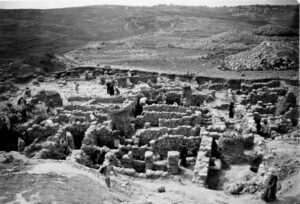
This month, the Badè Museum of Biblical Archaeology marks a meaningful milestone: 100 years since the excavation project at Tell en-Nasbeh, a site whose discoveries remain at the heart of the Museum’s collection and scholarly life.
The Museum has been an integral part of Pacific School of Religion since its earliest days. In 1927, William Frederic Badè, Professor of Old Testament literature and Semitic languages at PSR from 1902 to 1936, founded the Palestine Institute, the precursor to today’s Badè Museum. The Institute was created to support research and learning in biblical studies and archaeology, grounded in the remarkable collection of artifacts Badè brought back to Berkeley from his excavations at Tell en-Naṣbeh.
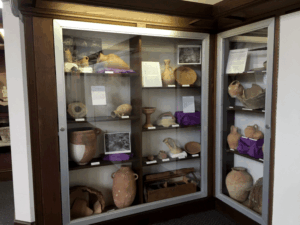
Over the decades, the size and scope of the Museum’s displays have evolved. Yet its significance has remained constant. Today, the Badè Museum holds the largest collection of its kind west of Chicago, serving as a vital resource for students, scholars, and visitors seeking to engage the material history of the ancient past.
The collection itself spans roughly 3,000 years and offers a vivid window into everyday life in the ancient world. Cooking pots, grinding stones, oil lamps, and agricultural tools from ancient Palestine sit alongside Greek and Cypriot ceramics, Egyptian scarabs, and cuneiform tablets from ancient Mesopotamia. Together, these objects tell stories not only of empires and economies, but of ordinary people, the rhythms of daily life, labor, and survival across generations.
The Badè Museum continues the work begun by William Badè and the original Institute through ongoing research, particularly centered on the Tell en-Naṣbeh collection. Museum staff and visiting scholars regularly engage these materials, uncovering new insights and asking fresh questions of this enduring archive.
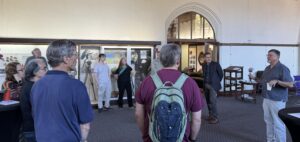
We began marking this centenary with a community open house, an evening filled with music, treats, and joy. The festivities continue this Thursday, April 23 at 5:00 PM with a Social Justice & Archaeology Talk sponsored by the Archaeological Institute of America, inviting us to consider how the study of the past intersects with present-day commitments to ethics, justice, and accountability.
As we commemorate 100 years since Tell en-Naṣbeh, we honor not only a historic excavation, but a living legacy—one that continues to shape how we study, teach, and engage the past with care and intention.